
High-Speed Reject

At Isoma, our high-speed rejection systems are designed for full integration into multiple applications within the food and beverage industry and popular within the pharmaceutical industry. They are automated systems that remove the need for manual intervention and keep a conveyor line running at its optimum speed.
There are various reasons for rejection along a conveyor system ranging from products having fallen, being damaged, being misshapen, having labels missing, caps missing or food products having metal detected within them from an X-ray. All have specific options to deal with the rejection efficiently. Weight, shape and line speeds are all monitored by various systems such as a checkweigher vision system or metal detector mechanism matching the speed of the line.
Detection systems can be tailored to suit the application such as a vision system that captures images through hardware like camera lenses, lighting or sensors (X-ray, PEC) linked to software to control the mechanical process of the rejection system. Most common are non-intrusive Photo Electric Sensors (PEC) that use beams of light and reflectors to alert the system to a fallen container, bottle or tin and then activate compressed air, arm pusher or diverter to remove the fallen container. Rejected products are collected into bins or on accumulation tables preventing them reaching the suppliers.
High Speed Reject Table
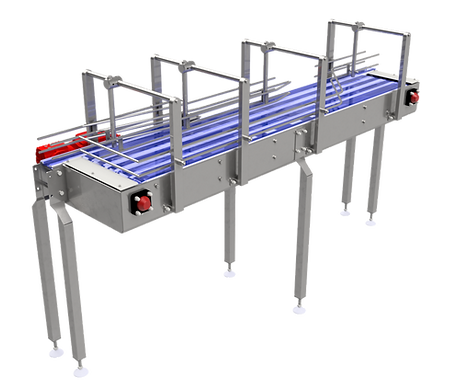
Pusher, Diverter and Air reject systems
Pusher (arm) reject systems use a pneumatic or electric arm to sweep non-conforming products, packs, bottles or containers sideways off the conveyor. This is one of the most widely used rejection methods on inline conveyor systems. This method tends to suit heavier items and more rigid packs where a controlled push removes the pack without damaging it, such as wrapped or boxed products.
Pusher systems are simple mechanical systems that are very easy to maintain and are consistent with multiple types of products and packages, containers and bottles. This system is mostly chosen as the standard when there are no specific constraints.
Diverter, or plough, reject systems use a sweeping arm or angled guide to redirect non-conforming packs into a separate lane or designated reject area, instead of removing them directly from the conveyor. This method is particularly suitable for higher-value or more delicate products, where a controlled and gentle diversion is preferred over a more forceful rejection process.
Diverter systems are typically chosen for applications where the value or fragility of the product calls for a more careful approach to rejection. However, they generally operate at a slower cycle rate than alternative methods such as pusher or air blast systems.
Air-blast rejection is a compressed air solution where fallen bottles or containers are recognised by sensors and at the correct point on the conveyor where they can then be physically ‘blown’ into bins. The high-pressure airline typically blasts 5.5 bar (80psi) through a fast-acting solenoid. The accuracy is guaranteed to be consistent.
Key Operational Benefits:
-
Prevention of bottle-necks and clogging, maintaining line speed and consistency.
-
Upright rejection of lightweight containers on lines with an output of 60,000 containers per hour.
-
Rejection and removal of both full and empty containers.
-
Push, diverter and compressed air rejection methods.
-
Air blast rejection is a non-intrusive solution that doesn’t have mechanical interaction.
Jar Rejection Table